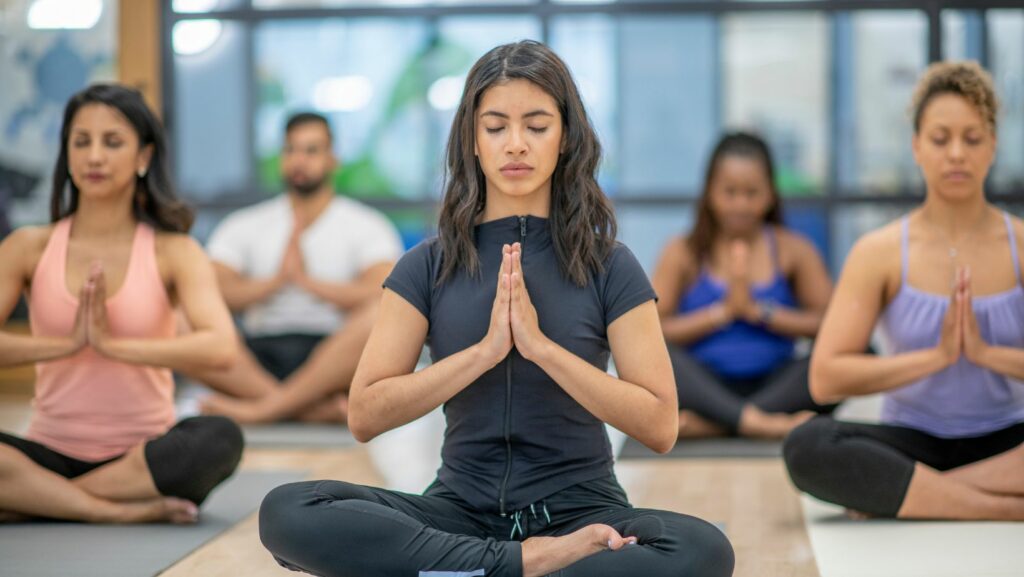

Picture this: You’re sitting cross-legged on your mat, the world outside is buzzing, but inside, you’re humming a single sound. Your chest vibrates. Your mind, usually a squirrel on espresso, starts to settle. That’s the power of yoga mantras. If you’ve ever wondered why people chant during yoga, or if you’ve tried it and felt a little silly, you’re not alone. But here’s the part nobody tells you—mantras aren’t just ancient words. They’re tools that can change how you feel, think, and even breathe.
What Are Yoga Mantras?
Yoga mantras are short, repeated sounds, words, or phrases. People chant them aloud or silently during yoga or meditation. The word “mantra” comes from Sanskrit: “man” means mind, and “tra” means tool. So, a mantra is literally a tool for your mind. If you’ve ever had a song stuck in your head, you know how powerful repetition can be. Mantras use that same principle, but with intention.
Why Do People Use Yoga Mantras?
Let’s break it down. Yoga mantras help you focus. They give your mind something to do besides worry about your to-do list or replay awkward conversations. When you repeat a mantra, you create a rhythm. That rhythm can slow your breath, calm your nerves, and even lower your heart rate. Science backs this up: studies show that chanting mantras can reduce stress and improve mood. If you’ve ever felt scattered during yoga, a mantra can anchor you.
How Yoga Mantras Work: The Science and the Mystery
Here’s why yoga mantras matter. When you chant, you’re not just making noise. You’re creating vibrations in your body. These vibrations can affect your nervous system. Some researchers believe that chanting “Om,” the most famous yoga mantra, stimulates the vagus nerve. That’s the nerve that helps you relax after stress. It’s like flipping a switch from “fight or flight” to “rest and digest.”
But there’s more. Mantras also work on a psychological level. Repeating a positive phrase can shift your mindset. If you’ve ever told yourself, “I can do this,” before a big moment, you’ve used a mantra. In yoga, the words might be in Sanskrit, but the effect is the same. You’re training your brain to focus, let go, and feel present.
Popular Yoga Mantras and What They Mean
Not all yoga mantras are the same. Some are ancient Sanskrit phrases. Others are simple English affirmations. Here are a few you might hear in class:
- Om: The sound of the universe. It’s said to connect you to everything around you. Try chanting “Om” three times at the start or end of your practice. Notice how the sound feels in your chest and throat.
- So Hum: This means “I am that.” It’s a reminder that you’re connected to the world. Inhale and think “So,” exhale and think “Hum.”
- Lokah Samastah Sukhino Bhavantu: This one’s a mouthful, but it means “May all beings be happy and free.” It’s a wish for kindness, for yourself and others.
- Sat Nam: From Kundalini yoga, it means “Truth is my identity.” It’s about being real, even when it’s hard.
If Sanskrit feels intimidating, you can use English mantras like “I am calm,” or “Let go.” The key is repetition and intention.
How to Use Yoga Mantras in Your Practice
If you’ve ever felt awkward chanting in class, you’re not alone. The first time I tried “Om,” I whispered so quietly I barely heard myself. But here’s the secret: you don’t have to be loud, or even say the words out loud. You can repeat a yoga mantra silently in your mind. The effect is still powerful.
- Pick a mantra. Choose one that feels right. If you’re anxious, try “So Hum.” If you want energy, try “Om.”
- Settle in. Sit comfortably. Close your eyes if you want.
- Repeat the mantra. Say it out loud, whisper it, or think it silently. Match it to your breath if you can.
- Notice what happens. Don’t force anything. Just observe how you feel. Maybe your mind wanders. That’s normal. Gently bring it back to the mantra.
Try this for a few minutes at the start or end of your yoga practice. Over time, you might notice you feel calmer, more focused, or just a little lighter.
Who Should Use Yoga Mantras?
Yoga mantras aren’t for everyone. If you love silence, or if chanting feels uncomfortable, that’s okay. But if you struggle with a busy mind, or if you want to add a new layer to your practice, mantras can help. They’re especially useful if you find meditation hard. The repetition gives your mind a job, so it’s less likely to wander.
If you’re skeptical, try it for a week. Pick a simple mantra and repeat it for five minutes a day. Notice how you feel. If it works, great. If not, you’ve learned something about yourself. No harm done.
Common Mistakes and Lessons Learned
Here’s the part nobody tells you: you’ll probably feel weird at first. I did. I worried I was doing it wrong, or that I’d sound silly. But yoga mantras aren’t about perfection. They’re about practice. If you forget the words, make up your own. If you lose focus, start again. The only mistake is giving up before you’ve given it a real shot.
Another lesson: don’t force it. If a mantra doesn’t resonate, try a different one. There’s no “right” way. The best yoga mantras are the ones that feel true for you.
Tips for Making Yoga Mantras Work for You
- Start small. One word or phrase is enough.
- Use your breath. Match the mantra to your inhale and exhale.
- Be patient. It might take a few tries to feel the effect.
- Write it down. Seeing the words can help you remember and connect.
- Try different times. Morning, before bed, or during a stressful moment—see what works best.
Remember, yoga mantras are a tool, not a rule. Use them when you need focus, calm, or a little extra courage.
Final Thoughts: The Real Power of Yoga Mantras
If you’ve ever felt like your mind is a runaway train during yoga, you’re not alone. Yoga mantras give you a way to slow down, focus, and connect. They’re simple, but powerful. You don’t need to chant perfectly or know Sanskrit. You just need to show up, repeat, and notice what happens. Sometimes, the smallest sound can make the biggest difference.